
Forecast is easily the most impressive mobile web (meaning HTML5 as opposed to native) app I’ve ever used. They’ve got some great recommendations based on lessons they learned, from managing user expectations to testing.
Great breakdown of what Blink means for browser and web developers without wading too deeply into the politics.
Two weeks ago Google announced to the shock and horror of many faithful users the imminent demise of Google Reader. Google! went the cry. Why would you do this? What are you thinking?
You’ve probably discovered this from working in organizations, with them, or just interacting with them at any level: Organizational decisionmaking can be crazymaking, and often in a very different way from individual decision making. There are similarities, such as the frustration of why?! which can be as powerful when stonewalled by an organization as when someone dumps you cold with no rhyme, reason, or explanation. But groups, by nature of being groups, inherently have different decisionmaking processes than individual actors. Understanding a few of those may not explain the choices organizations make, but it can help us understand how they get to them.
There are many decisionmaking processes we could explore in this series, so today let’s look at one: the garbage can process. This takes us away from the Google example — you’ll see why in a minute — but chances are it will help you understand a frustrating client better, or even see some decision making processes in your own company that are leading to less than ideal outcomes.
The way an organization makes decisions depends on a number of things, such as how the organization is structured and who the members are. For example, more traditional top down hierarchical organizations have a chain of command, and there are organizations known organized anarchies. Organized anarchies and their decision making processes comes from work by Michael Cohen, James March, and Johan Olsen.
An organized anarchy is an organization made up of political alliances that have various, often competing goals, interests, and values. These goals may be ambiguous and there may be many of them from each group, so there’s no clear path to issue resolution. You’ll find this in organizations that don’t have a clear “technology” or a defined “product” but are more of a professional service, like a law firm, a non-profit, a consultancy, or perhaps even publishing. Procedures and decisions are based on historical precedence, experience, organizational routine, trial and error. People in these organizations participate in decision making in different ways and to different degrees, depending on the concern at hand and how much it matters to them, rather than as a matter of hierarchy. So, some issues will matter to some of the people some of the time. Not all issues matter to everyone all of the time, and that means getting something to change can be difficult, because it’s easier to rely on the same old, same old.
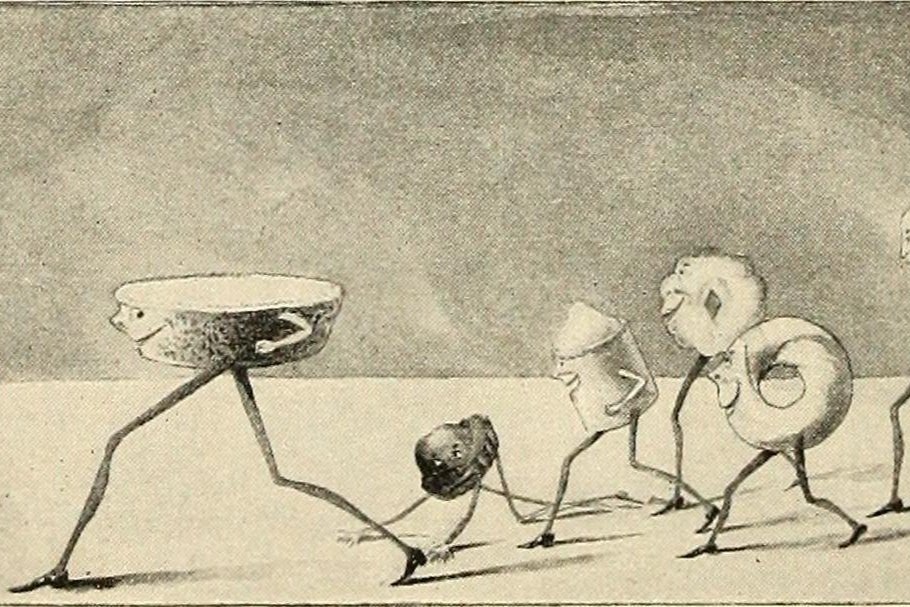
In these sorts of organizations, decisions get made in Cohen, March, and Olsen call the garbage can process. This is shorthand for “decisions as accidents”. Rather than approach decision making from a more linear, rational approach — as rational as decision making can be, at any rate, with a clearly defined set of issues, a set of invested stakeholders, and a method of determining solutions — the garbage can model has everything all jumbled up. So many problems! So many unrelated questions! So many solutions just waiting to be the answer to a problem!
Ah, see? In the garbage can process, standard operating procedures (SOPs) are often offered up as solutions to problems, reinforcing the existing procedure. Or, someone comes up with a solution first and then roots around in the can to see if they can find a problem to apply it to. There are also a lot of post-hoc narratives to explain the decision making process after the fact. It may make the decision look rational and coherent, but is simply a rationalization of why a solution-in-search-of-a-problem was the right answer.
Any of this sound familiar, fellow designers? Obviously, changing an organizational culture is difficult and sometimes more work than you want to take on. This is especially true as a consultant. But there are ways to work around the garbage can and improve the decision making process, which we’ll examine about in future posts.
As an outsider, there’s no way to ever know how an organization came to a particular decision. It’s sometimes difficult to know as an insider, depending on your access to information or on the ways in which the decision was made. It’s tempting to think we all, whether as individuals or as organizational actors, make rational decisions with a full range of information. But a lot of the time, we’re making decisions based on the situations in which we’re embedded. And while we like to think we’re optimizing — carefully considering each possibility and bit of data until we reach the ideal solution — we’re satisficing — heaving a big huge sigh of relief as soon as we find a solution that will work pretty well as soon as we come across is.
And who knows — perhaps a decision making process we explore in the coming weeks will help explain the Google Reader decision.
As Jim outlined so eloquently last summer, we built Evening Edition with one primary goal in mind: to catch you up on the word’s biggest stories during your commute home each weekday. We expanded on our mobile-friendly site last fall, introducing daily email versions of Evening Edition delivered straight to your inbox.
We publish three different web editions (with more to come): Paris, London and San Francisco, and we recently introduced a fourth: the Evening Edition podcast. The podcast gives you another way to get your daily dose of news, offering highlights of the most important topics covered across our web editions, alongside a selection of stories exclusive to the show.
Like the web editions, it’s designed to be quickly and easily consumed. You give us five minutes, we’ll give you a big-picture look at what’s going on in the world around you. And when you’re ready for a deep dive into specific stories, you’ll find source links for the news mentioned in each episode on our show pages.
Angela Kilduff and I, your humble co-hosts, are excited to bring the podcast to the Evening Edition family, and we hope it becomes an integral part of your news day. Check it out and let us know what you think.
You can find the show on the Mule Radio Syndicate and Soundcloud, and you can subscribe via RSS and iTunes.
Finally, if you’re interested in sponsoring Evening Edition or another Mule Radio podcast, you can start here.
Before I came to Mule, I spent a few years (this will be a funny joke to some of you) getting my PhD in sociology. My dissertation research was in healthcare — specifically, I observed doctors’ offices in ambulatory care as they transitioned from paper records to Electronic Health Records (EHR). People often ask me why healthcare has taken so long to adopt EHR, and I tell them the answer is because it’s such a huge and complicated problem to tackle, partly because health records themselves are very complex, with many elements and policy and privacy considerations. But more than that EHRs require monumental changes for the organizations and for the individuals who will use them, in terms of organizational culture, routines and workflows, even professional identity. The ways in which healthcare providers adapt to such a big change may depend very much on these same issues, too.
Last year on Let’s Make Mistakes, we were very lucky to have Karen McGrane on as a guest, talking about her work and her book Content Strategy For Mobile. At one point during our conversation, Karen mentioned working in the publishing industry and the experience of trying to change an industry — trying to drag aspects of the print industry print kicking and screaming over to digital.
Her experience sounded a lot like some of my research. And like a lot of industries, really. We got to chatting, but not as much as we might have liked, about organization theory and stagnation and a steadfast digging-in-of-the-heels by people who have done the same things in the same ways for decades because that’s the way it’s always been done. It’s interesting, I said, to see how entrenched behaviors can be and to understand how they become tied to more than just money. Behaviors that seem stupid to outsiders hoping to shake things up are often tied to things like a very familiar workflow or someone’s routine. Organizational culture can very much affect how people respond to and engage with change — or don’t! Changing isn’t always as simple as we’d like to think it is, no matter how obvious and head-smackingly clear the solution is. Based on what Karen was saying about the publishing world, based on what a lot of people in the design world said about a lot of the industries they encountered, it sounded like a similar set of problems that might be worth examining.
I considered writing a blog post or two about the intersection of organization theory and design, but I had a realization: This isn’t a blog post or two, this is a series. Every day we as designers engage with organizations and organizational actors who are experiencing change at some level, whether a new website or a business strategy or a growth spurt or a pivot. We encounter organizational behaviors that make us roll our eyes or smack our foreheads.
So I hope you’ll join me here on the Mule Design Studio blog as this biweekly series explores where organization theory and design meet, with an eye for how the former can help us better understand the challenges we face and solutions we create.
Luke Wroblewski offers a round-up of recently published data on the bottom line impact of a number of recent responsive design roll-outs, including Time Inc.’s well-regarded recent redesign.
Some smart analysis, as always, on the short and long-term impact of having one fewer rendering engine in the wild.
Personally, I’m not terribly concerned about a “monoculture” of rendering engines. WebKit seems to have done a rather good job of innovating at a rapid clip and bringing a variety of ideas, even from fierce competitors. I just don’t subscribe to the “it will become the new IE if you let it” theory but I’m willing to entertain other opinions.
What do you think? Is this the beginning of the end for browser innovation or should we welcome our WebKit overlords with open arms?
Related: John Resig says WebKit is the jQuery of browser engines.
There’s a lot to like about The New Republic‘s redesign — it’s a bold, contemporary effort for a magazine that’s almost 100 years old. The Times has a look at what they’re doing to take on some their bigger challenges like circulation and, well, relevance.
Using webfonts for icons is all the rage these days and there a lot of great solutions, some free, some worth every penny of what you’d pay to use them. IcoMoon takes this one step further by letting you create your own custom font set of only the icons you need for a project. They’ve got a whole bunch of free or purchase-able icons for you to choose from or you can upload your own.
Q: Mule has a pretty balanced gender split. Is this a conscious decision?
A: Absolutely. From the get-go Mule was 50% female. Which is easy to do when there are two of you and one is female. But as we’ve grown we’ve tried very consciously to maintain a good balance. And never, not once, have we not hired the best person for the job. And we’ve never decided ahead of time that we needed to hire a woman or a man for a particular role. What we’ve done is make sure that everyone has an equal opportunity to be hired. And lo and behold, we’ve found that when you give a population that’s roughly 50% female an equal chance you end up with a roughly 50% female staff. It fluctuates from time to time, we’re currently at 36%, and we’ve been as high as 80%. (Ironically, we’re also currently at our whitest, a fact I’m sure you’ll be glad to point out to me in the comments.) But the point isn’t to aim for a certain percentage. The point is to foster an environment where different viewpoints are not just welcomed, but encouraged. And when women apply here they see themselves reflected in who’s interviewing them, making this feel like a more welcoming place.